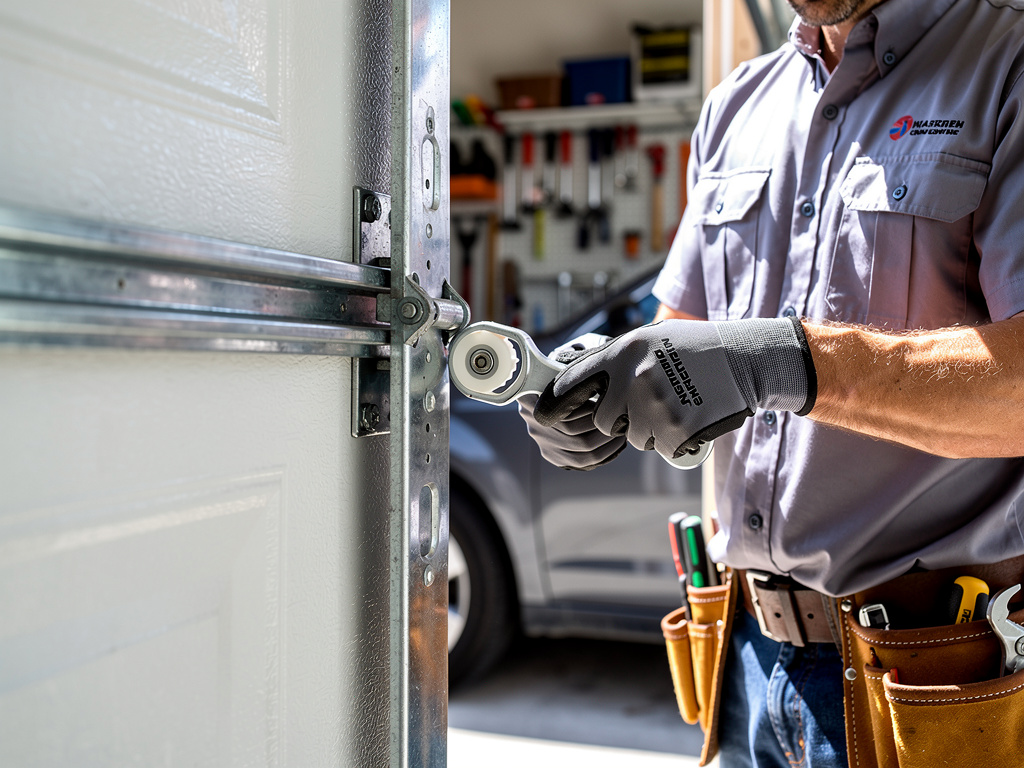
How Garage Door Rollers Work
Garage door rollers are small wheel components that glide along the metal tracks mounted on each side of the door frame, allowing the door to open and close smoothly and safely. Typically, a residential garage door has 10 to 15 rollers, depending on its height and weight. Rollers are attached to the door’s vertical and horizontal panels via hinges, and they run inside the track channels to guide the door’s movement.
Rollers come in two primary materials: steel and nylon. Steel rollers are durable but tend to be noisy and prone to rust, making them less ideal in humid environments like Weston. Nylon rollers are quieter and resist corrosion better, especially when made with high-quality 13-ball bearings that reduce friction and wear for smoother operation. Bearings inside the rollers support the wheel’s rotation, and higher-ball-count bearings (13 vs 10) typically provide longer-lasting performance.
Properly functioning rollers reduce the stress on the garage door’s springs and opener system. When rollers wear out or seize, the door can become noisy, jerky, and may even come off its track, posing safety hazards. Routine maintenance involves lubricating rollers and hinges every 3-6 months to keep the system running efficiently.
South Florida Environmental Factors That Affect Rollers in Weston
Weston’s location in Broward County near the Atlantic Ocean exposes garage door components to unique challenges. High summer humidity levels often exceed 85%, accelerating the corrosion of metal parts, including steel rollers and hardware. Additionally, the salty air carried inland from the ocean oxidizes exposed metal surfaces, leading to rust and accelerated wear.
Local HOAs in Weston also require garage doors to meet Miami-Dade NOA hurricane wind-load standards to withstand tropical storms. This means hardware must be strong and corrosion-resistant to maintain structural integrity. Using galvanized hardware and high-cycle springs is essential for compliance and durability.
Another South Florida-specific issue is sensor interference from lizards and geckos commonly found around Weston homes. These reptiles can obstruct or damage sensor wiring, causing door operation problems. Ensuring rollers and sensors are properly installed and maintained helps prevent such disruptions and keeps your garage door system reliable year-round.
Warning Signs Your Garage Door Rollers Need Replacement
- Loud grinding, squeaking, or rattling noises during door operation
- Visible rust or corrosion on rollers or hinges
- Door movement is jerky, uneven, or slow
- Rollers wobble or appear misaligned within the track
- Door occasionally comes off its tracks or sticks
- Excessive vibration or shaking when the door opens or closes
If you notice any of these signs, your rollers are likely worn or damaged and need immediate attention. Ignoring faulty rollers can lead to more serious door damage, including bent tracks, broken springs, or opener motor strain that increases repair costs. Early replacement with quality nylon rollers ensures quieter operation and safeguards your investment.
Why DIY Garage Door Roller Replacement is Dangerous
Replacing garage door rollers is not a simple DIY task due to the complex tension systems involved. Garage doors are under high spring tension, which can cause serious injury or property damage if released improperly. Attempting to remove or install rollers without professional tools and training risks the door suddenly dropping or the springs snapping.
Additionally, incorrect roller installation can cause door misalignment, unsafe operation, or further wear on other components like tracks and springs. Professionals use specialized equipment to safely decompress springs, remove old rollers, and install new ones precisely to meet manufacturer and HOA specifications.
Choosing a licensed technician from Garage Door Repair of Weston ensures your rollers are replaced safely, quickly, and compliant with local building codes and noise ordinances. This minimizes noise pollution and maximizes the longevity of your entire garage door system.
Step-by-Step Garage Door Roller Replacement Process
- Perform a thorough inspection to assess the condition of rollers, tracks, springs, and hardware.
- Disconnect the garage door opener to allow manual operation and ensure safety.
- Carefully release spring tension using professional winding bars to avoid injury.
- Remove the old rollers by detaching door hinges and sliding rollers out of tracks.
- Clean and lubricate tracks and hinges to prepare for new roller installation.
- Install new rollers—preferably nylon with 13-ball bearings—for quieter and smoother operation.
- Reattach hinges and ensure rollers align perfectly within tracks for safe movement.
- Re-tension springs according to manufacturer specifications and test door balance and operation.
Regular lubrication every 3 to 6 months using silicone-based sprays keeps rollers in top condition and complies with Broward County HOA noise ordinances. Upgrading to nylon rollers significantly reduces noise, making your garage door operation peaceful for you and your neighbors.